
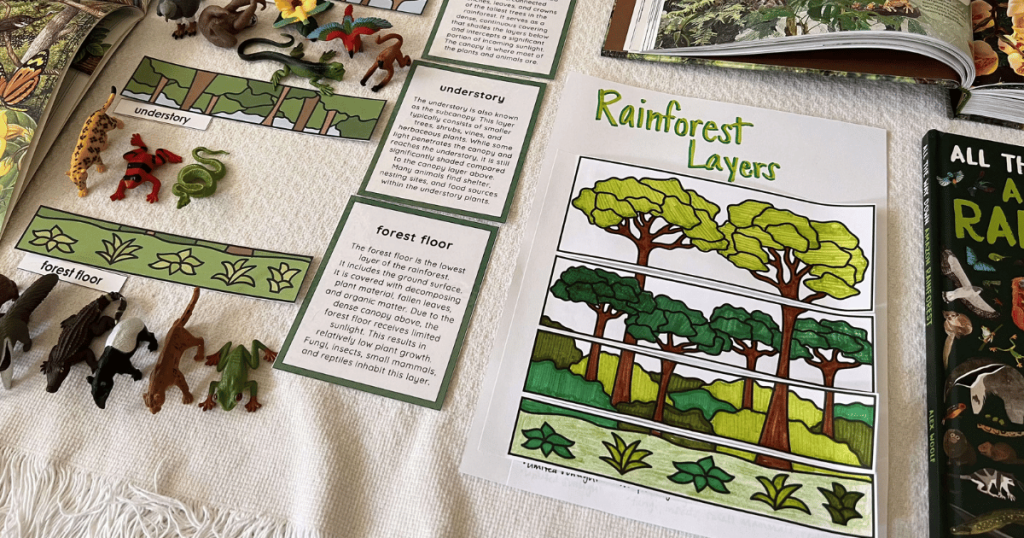
Exploring the Rainforest: Our HOKA Elementary Adventure
“Mom, did you know a giant anteater’s tongue can be as long as two feet?” My ten-year-old’s eyes widened as she held up the animal card from our HOKA Elementary Rainforest resources. In our Montessori homeschool, we’re always looking for materials that spark this kind of spontaneous discovery, and these resources didn’t disappoint. What started as a simple exploration of rainforest layers turned into weeks of fascinating discoveries, engaging activities, and even some sneaky math practice! Let me share how it all unfolded with my twins.
Setting the Scene: Tropical Rainforest Layers
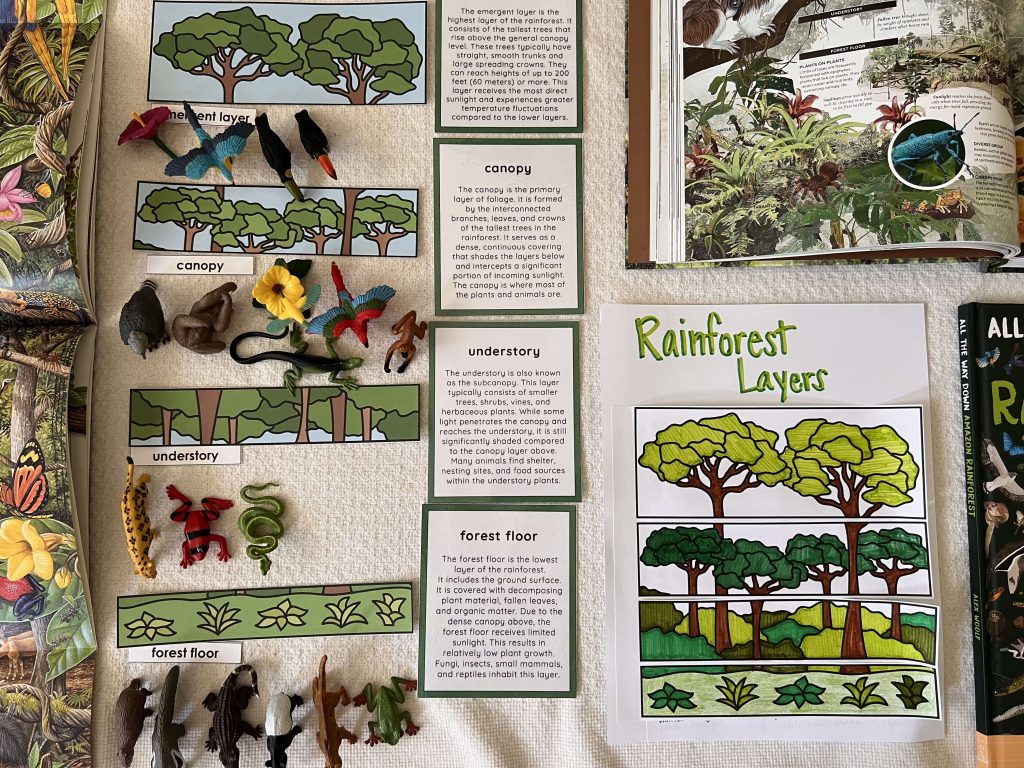
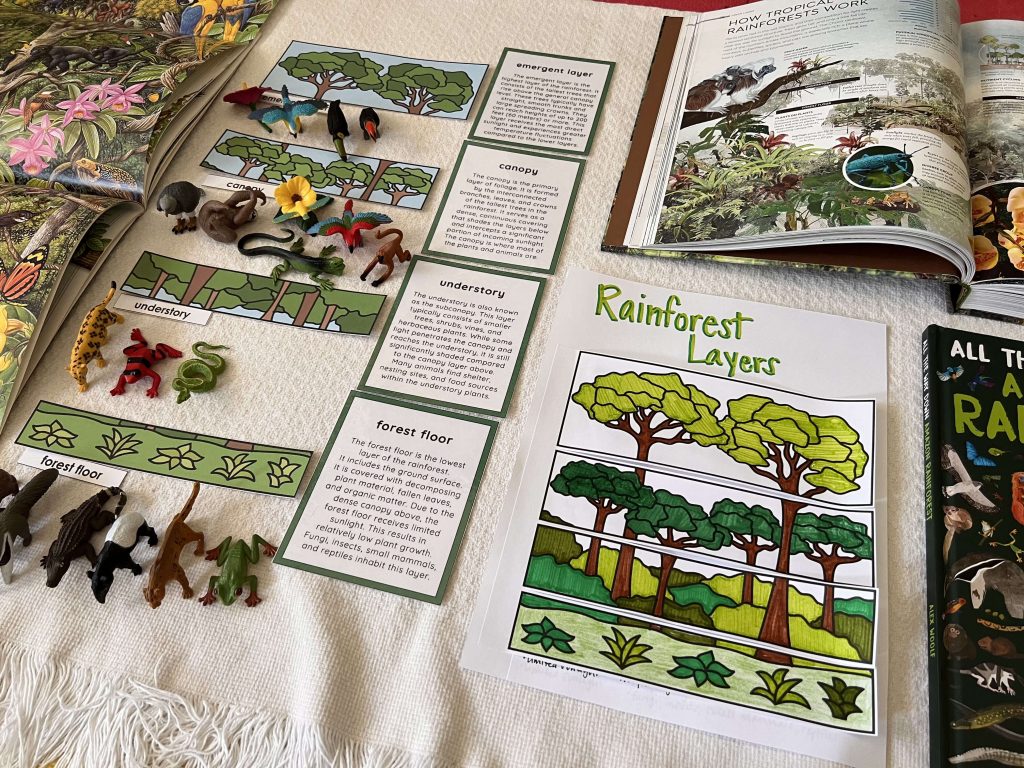
We jumped into our rainforest journey with HOKA Elementary’s Layers of the Tropical Rainforest cards. I’ll never forget my son’s reaction when he realized just how tall the emergent layer trees are – “That’s taller than our house stacked on top of itself five times!” This sparked a whole discussion about scale and height that I hadn’t even planned.
The kids spread out all the layer cards on our work mat, and I brought out our collection of animal figures. What I thought might be a quick sorting activity turned into an hour-long discussion as they debated where certain animals belonged. “But Mom, what if the monkey climbs down to the understory to get food? Should we put it there too?” These were the kinds of thoughtful questions that showed me they were really engaging with the material.
Making It Their Own
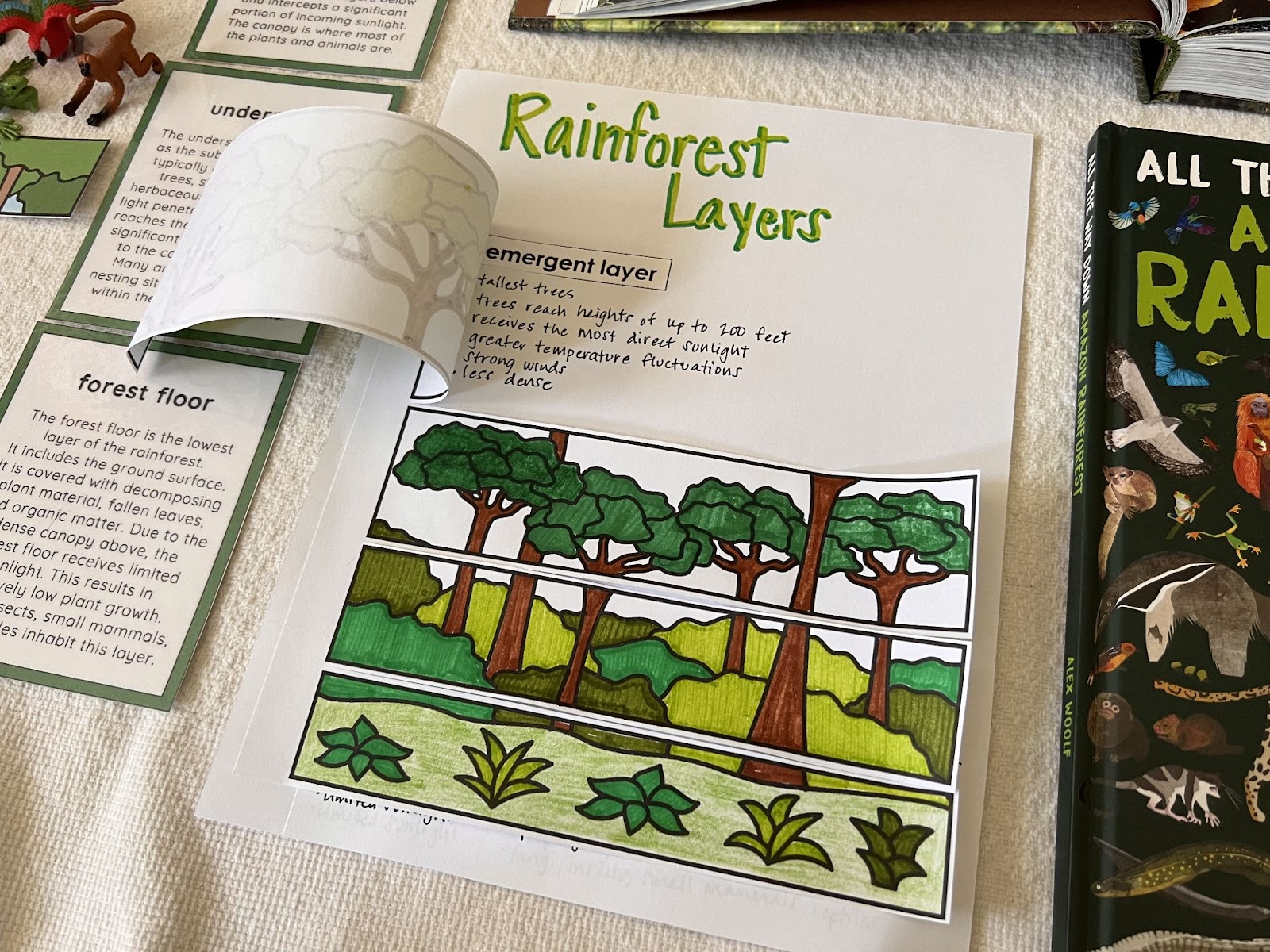
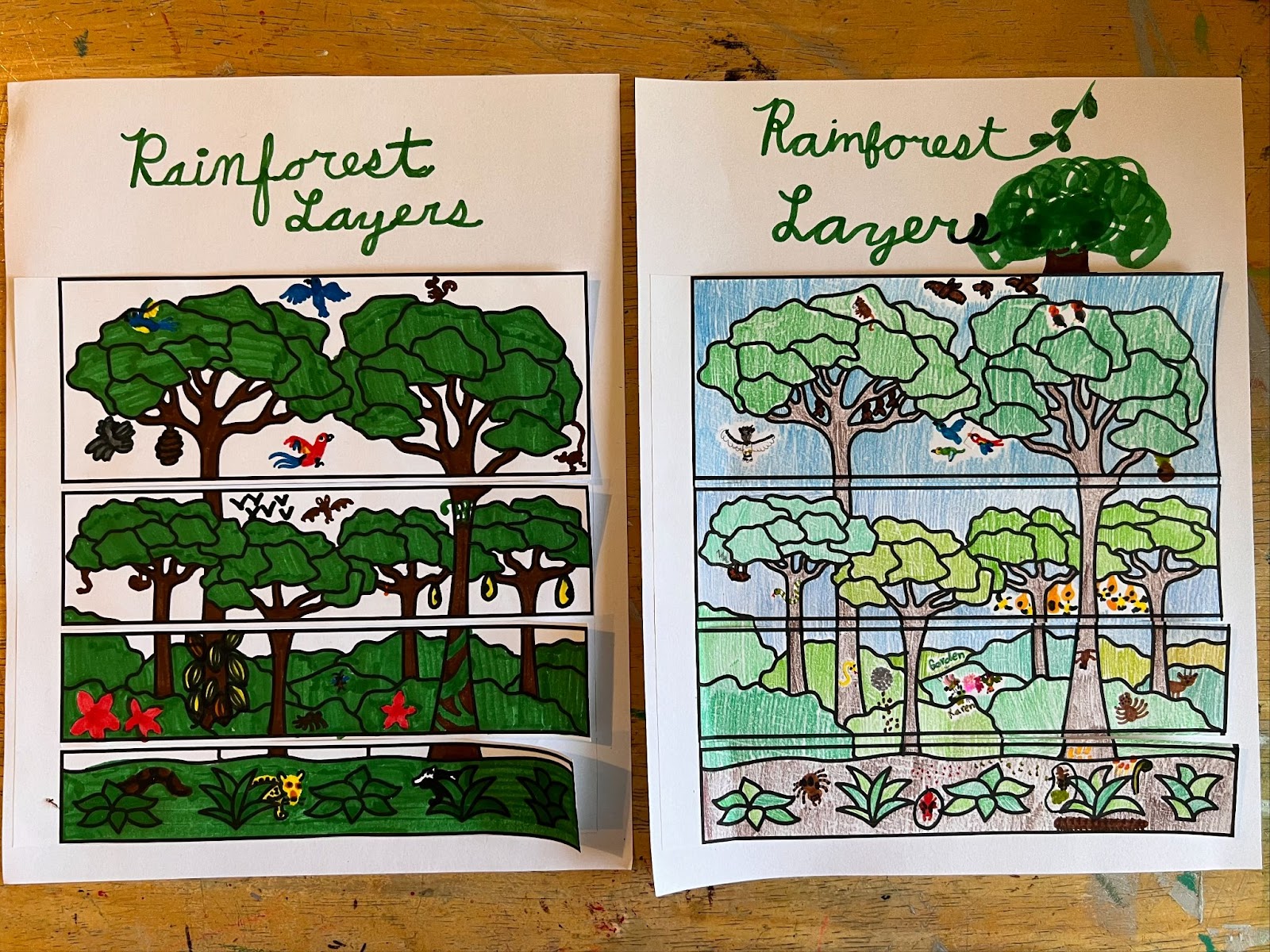
One of our favorite activities was creating rainforest flipbooks using the Label the Layers of the Rainforest resource. My son, our resident artist, spent extra time adding tiny details to his illustrations – even drawing a sleeping sloth hidden among the leaves! My daughter, while also artistic, focused on filling her book with “Did you know?” facts about each layer, though she couldn’t resist adding her own animal drawings in the margins. It was wonderful seeing how they each brought their own interests to the project.
Around the World We Go
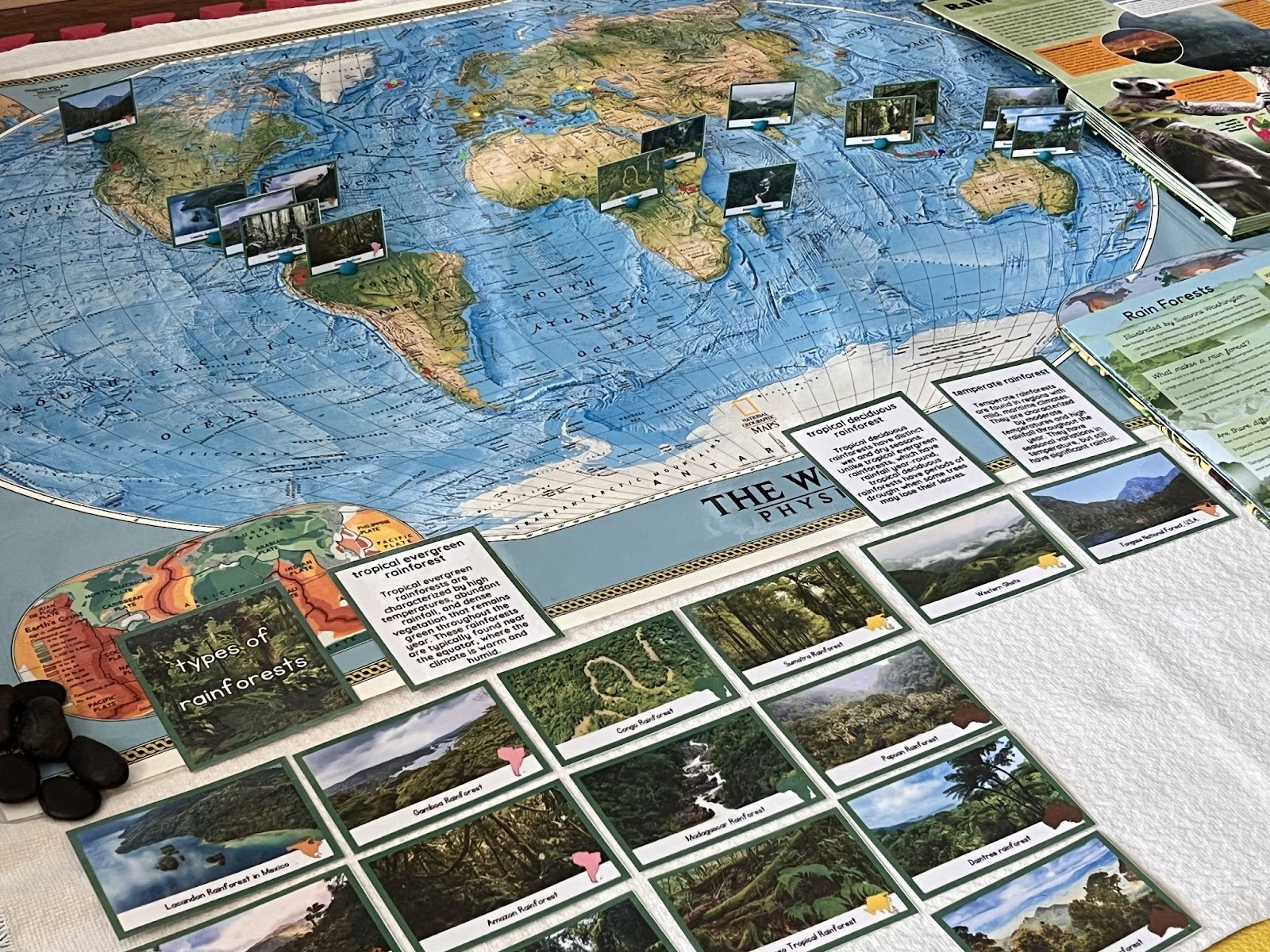
The Rainforests of the World cards opened up a whole new dimension to our learning. I printed these slightly smaller than the original size, which worked perfectly for our world map activity. The kids took turns placing each rainforest card in its location, and I loved hearing their surprise when they realized rainforests exist beyond the Amazon. “Wait – there are rainforests in Asia too?” This led to an impromptu comparison of different rainforest types and what makes each unique.
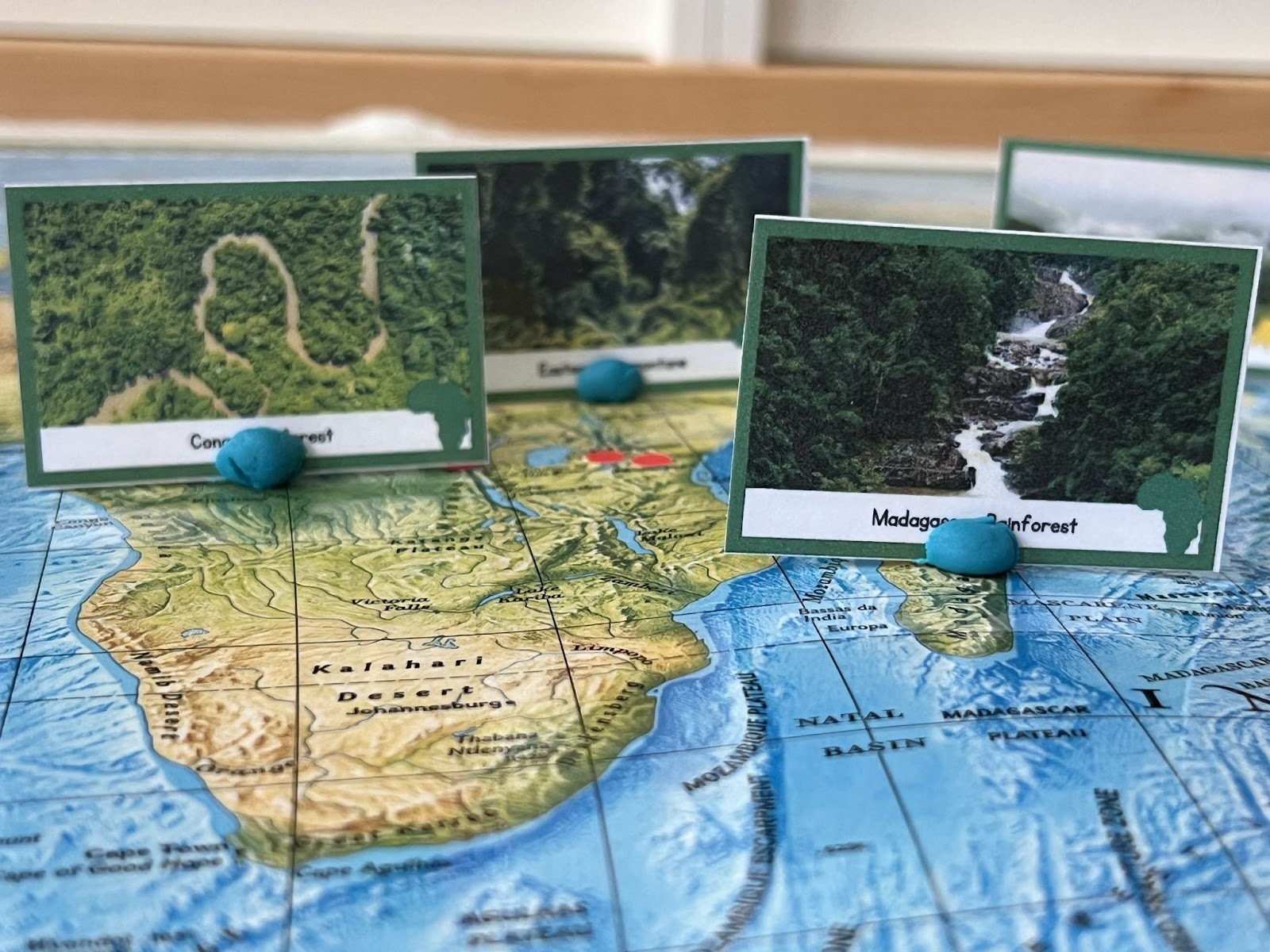
Quick Tip: Play dough has become our go-to tool for placing cards on our laminated world map – it’s easy to work with and never leaves marks on the surface!
Making Conservation Personal
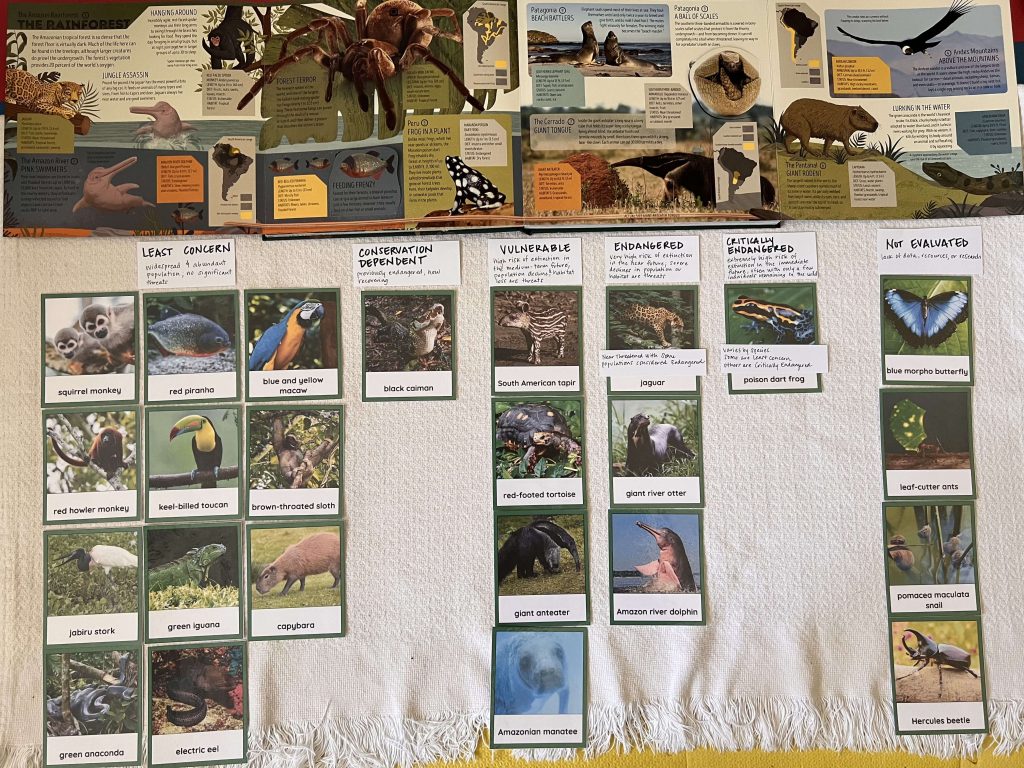
The most impactful moments came during our conservation discussions. Using the Amazon Plants and Animals 3-part cards, we sorted animals by their conservation status. What I hadn’t expected was how personally my kids would take this information. After learning about the endangered status of several species, they spent their afternoon designing “Save the Rainforest” posters and brainstorming ways our family could help. “Maybe we could adopt a rainforest animal?” my son suggested. These conversations went far deeper than I’d anticipated, showing me how naturally children connect with environmental issues when presented in a relatable way.
Adding Some Mathematical Fun
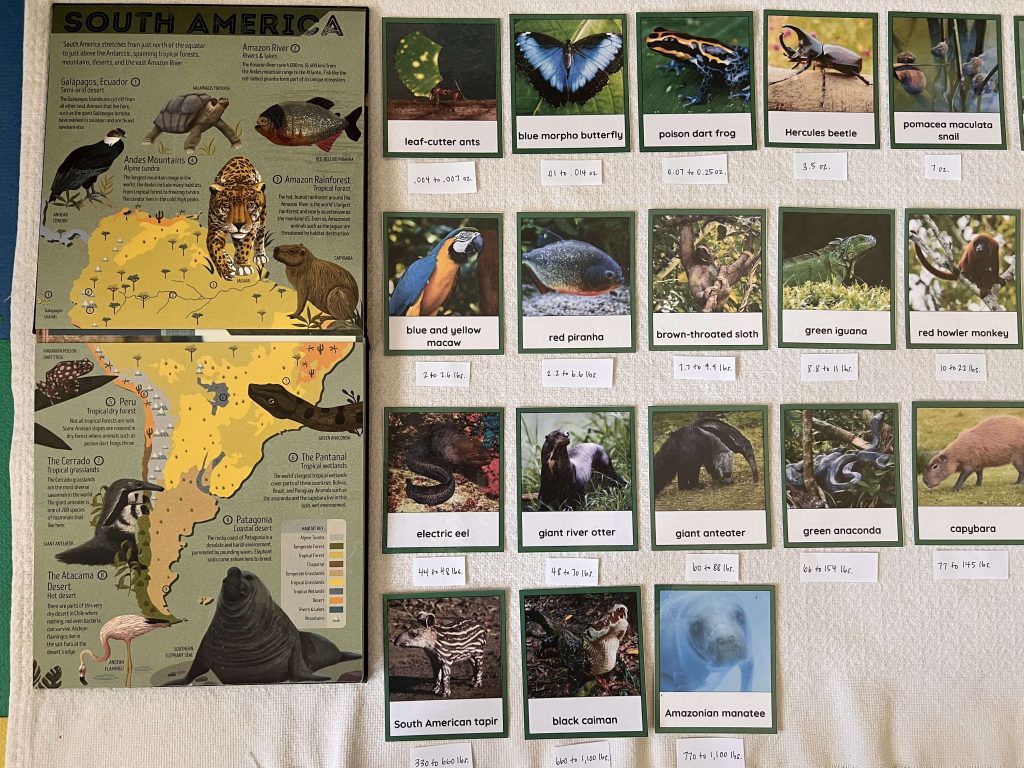
Quick Tip: Creating a simple graph template beforehand helps keep the data organization neat and engaging!
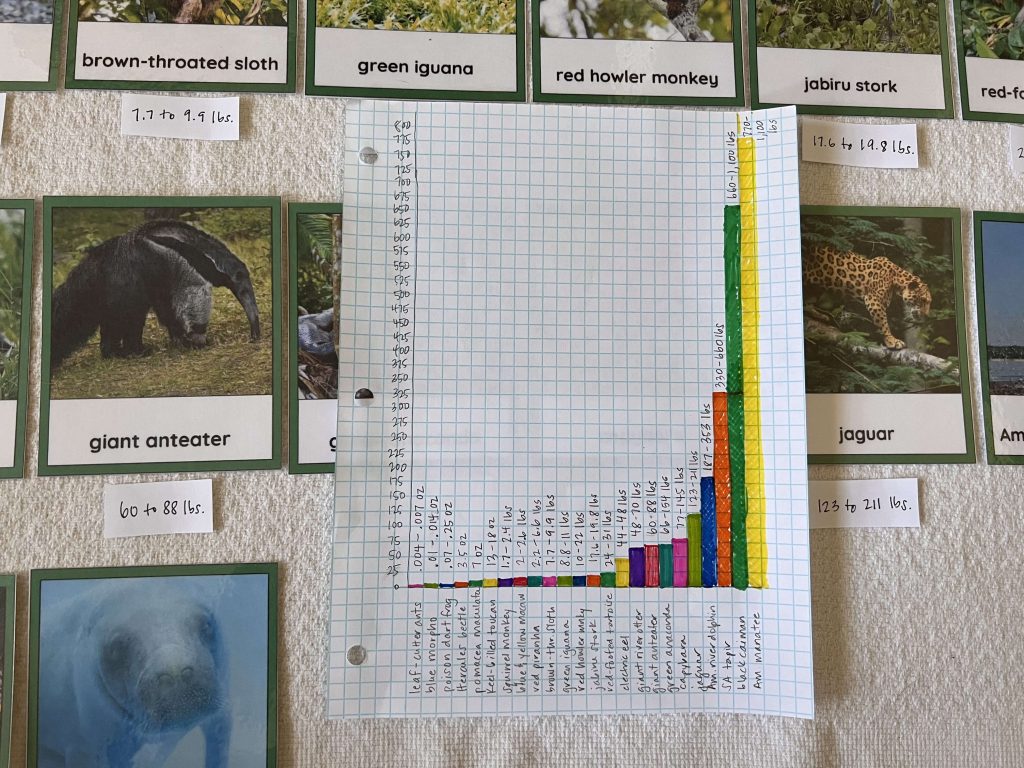
Who knew rainforest animals could make math so exciting? We used the animal cards to create size comparison graphs, and the kids were amazed by the scale differences. There was lots of giggling as they plotted the tiny blue morpho butterfly alongside the massive Amazonian manatee. “It’s like comparing a grape to a car!” my daughter exclaimed. These kinds of concrete comparisons really helped the size differences sink in.
Broadening Our Horizons: Exploring World Biomes
Our curiosity naturally spilled over into learning about other biomes. To build on the fantastic foundation provided by HOKA Elementary’s Biomes of the World cards, I created complementary animal cards for hands-on mapping activities. The kids were fascinated by how different animals adapt to various environments, eagerly placing each creature in its corresponding habitat on our world biomes map. “It’s like each biome is its own little world,” my son observed as he positioned a snow leopard card in the mountains of Asia.
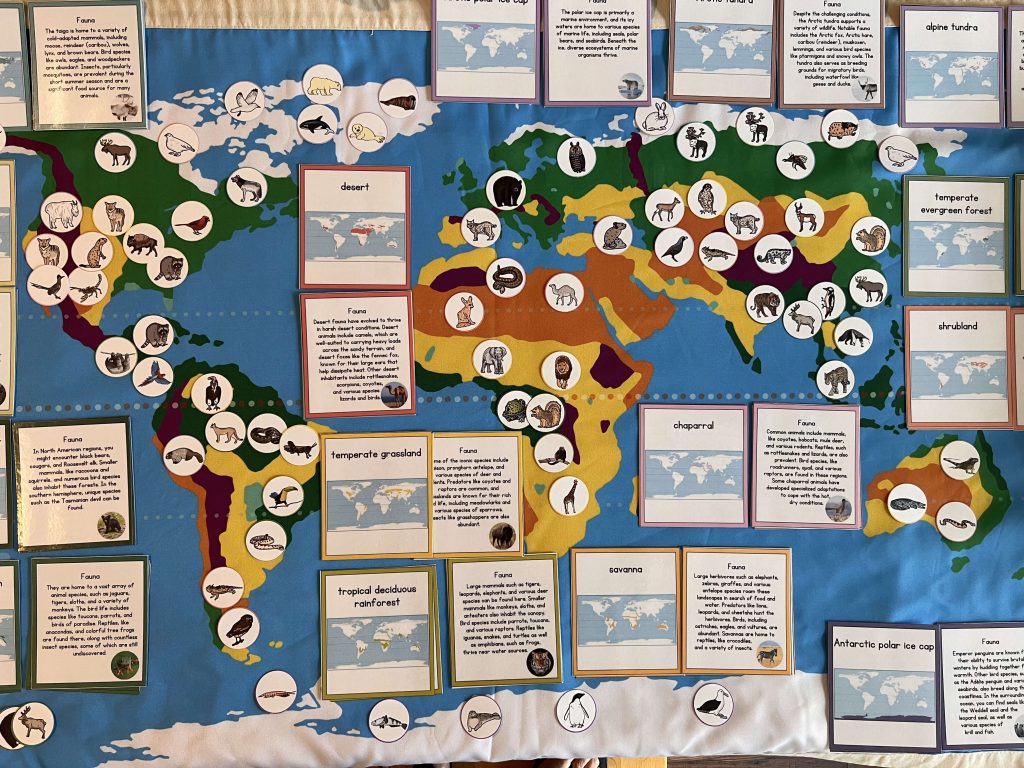
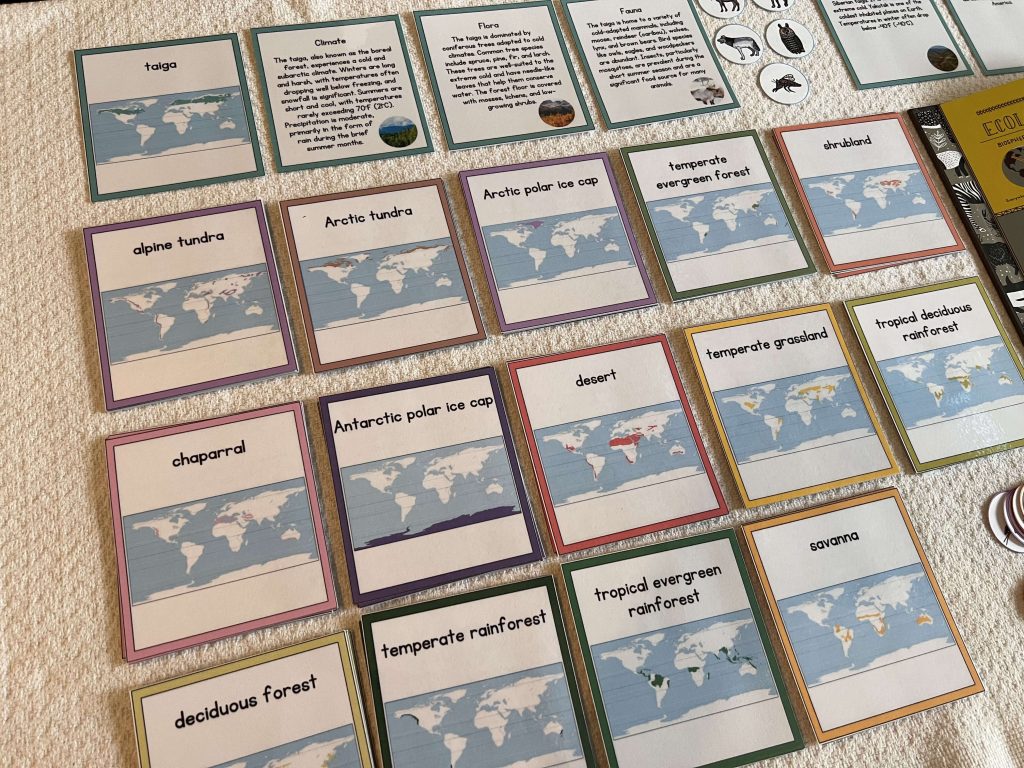
As they worked, they began visualizing how ecosystems are spread across the globe – from the harsh tundra to lush grasslands. The combination of HOKA’s biome cards and our supplemental animal cards helped reinforce a crucial lesson: while rainforests are incredible and vital, they’re just one part of Earth’s wonderfully diverse ecosystem. This extension of our rainforest study opened their eyes to the broader picture of global biodiversity and adaptation.
The Power of Self-Directed Learning
What impressed me most was watching my kids take charge of their own learning – a core principle in our Montessori homeschool approach. Some days they’d spend time arranging and rearranging animals in their habitat layers. Other days, they’d create their own quizzes for each other about rainforest facts. The materials from HOKA Elementary provided just the right framework for them to explore independently while staying engaged and focused, perfectly aligning with our Montessori philosophy of following the child’s interests.
Looking Back
As I write this, I can see our rainforest flipbooks proudly displayed on our science shelf, and the world map still has some rainforest cards stuck to it – the kids aren’t quite ready to take them down yet. But the real success isn’t in the completed projects or perfectly filled-out worksheets. It’s in the dinner table conversations about conservation, the spontaneous drawings of rainforest layers, and the genuine excitement when we spot rainforest animals in nature documentaries.
Our rainforest exploration with HOKA Elementary’s materials did more than teach facts – it sparked curiosity, encouraged critical thinking, and helped my kids see their connection to the natural world. And isn’t that what learning is all about?
HOKA Elementary
Want to explore these resources with your own children?
You can find all the HOKA Elementary materials mentioned in this post at
See more from Heather here
Heather is a passionate homeschool educator specializing in Montessori-inspired methods for upper elementary students. With a background as a history teacher, she creates engaging, cross-curricular resources designed to inspire creativity and hands-on learning. When she’s not crafting educational content, Heather is an avid reader and enjoys spending time doing arts and crafts with her kids. She shares her expertise and homeschooling journey on Instagram, helping parents create enriching learning experiences at home. Check out her educational resources on her Teachers Pay Teachers store, Twin Wrens Learning, and follow her on Instagram for more homeschooling tips and ideas.
Get in touch with Heather
- Teachers Pay Teachers Store: https://www.teacherspayteachers.com/store/twin-wrens-learning
- Instagram: https://www.instagram.com/twinwrenslearning/
- Amazon Storefront: https://www.amazon.com/shop/twinwrenslearning